
Fileora: 150 free file tools that run in your browser
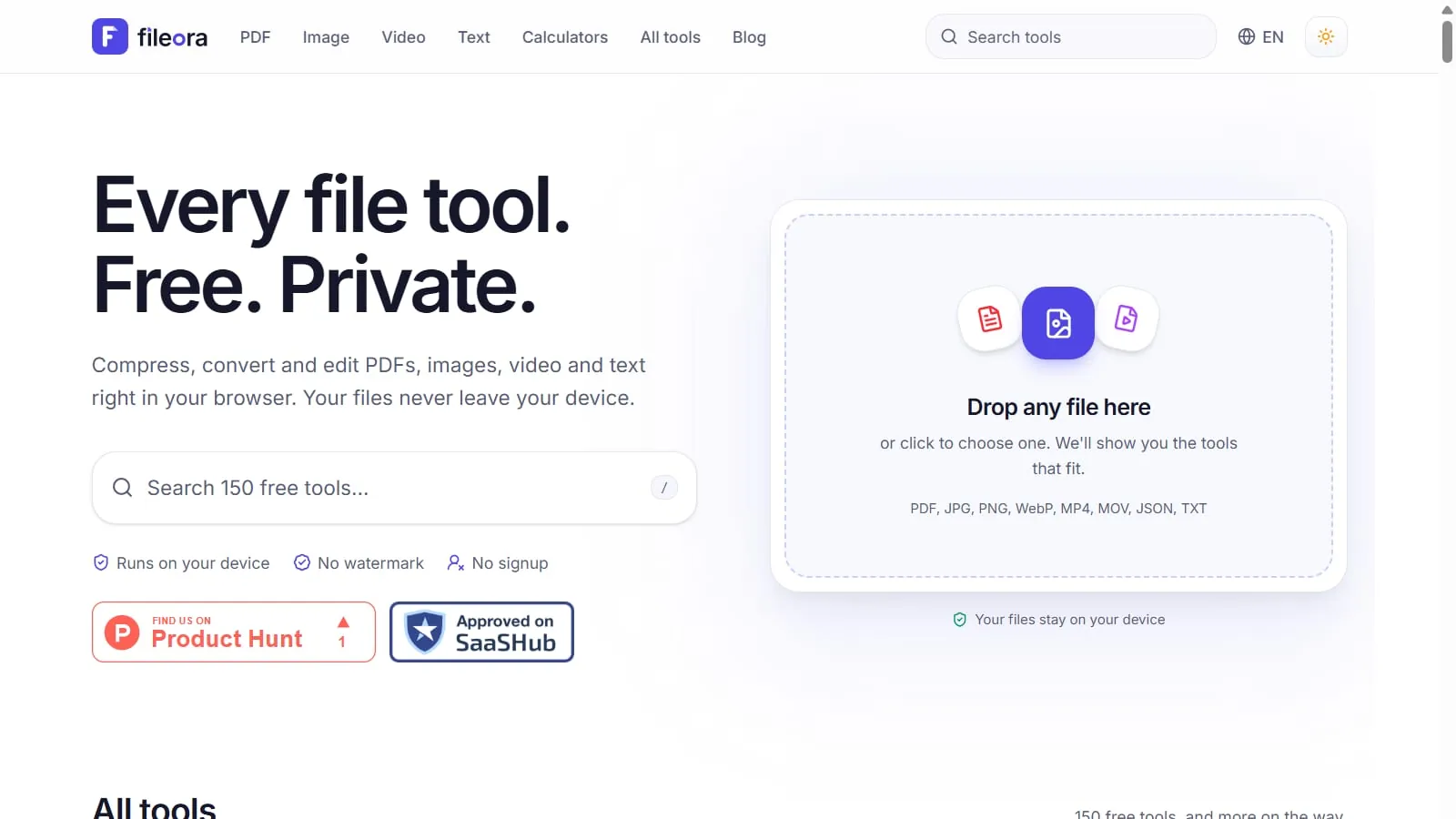
Our own product. A free toolbox for PDFs, images, video, text, calculators and more, in five languages. Every tool runs on the visitor's device, so files are never uploaded.
- Next.js
- TypeScript
- Tailwind CSS
- WebAssembly
- 5 languages
Why we built it
Most online file tools ask you to upload your PDF, photo or video to someone else's server, often behind a sign-up or a limit. We wanted a toolbox that does the opposite: free, no account, and the file never leaves the device it is on. That also meant there is no server to pay for, which is what lets it stay free.
What it does
- About 150 tools in eleven groups: PDF, image, video and audio, text, calculators, converters, developer tools, social media, utilities, Urdu and Hindi tools, and Islamic tools.
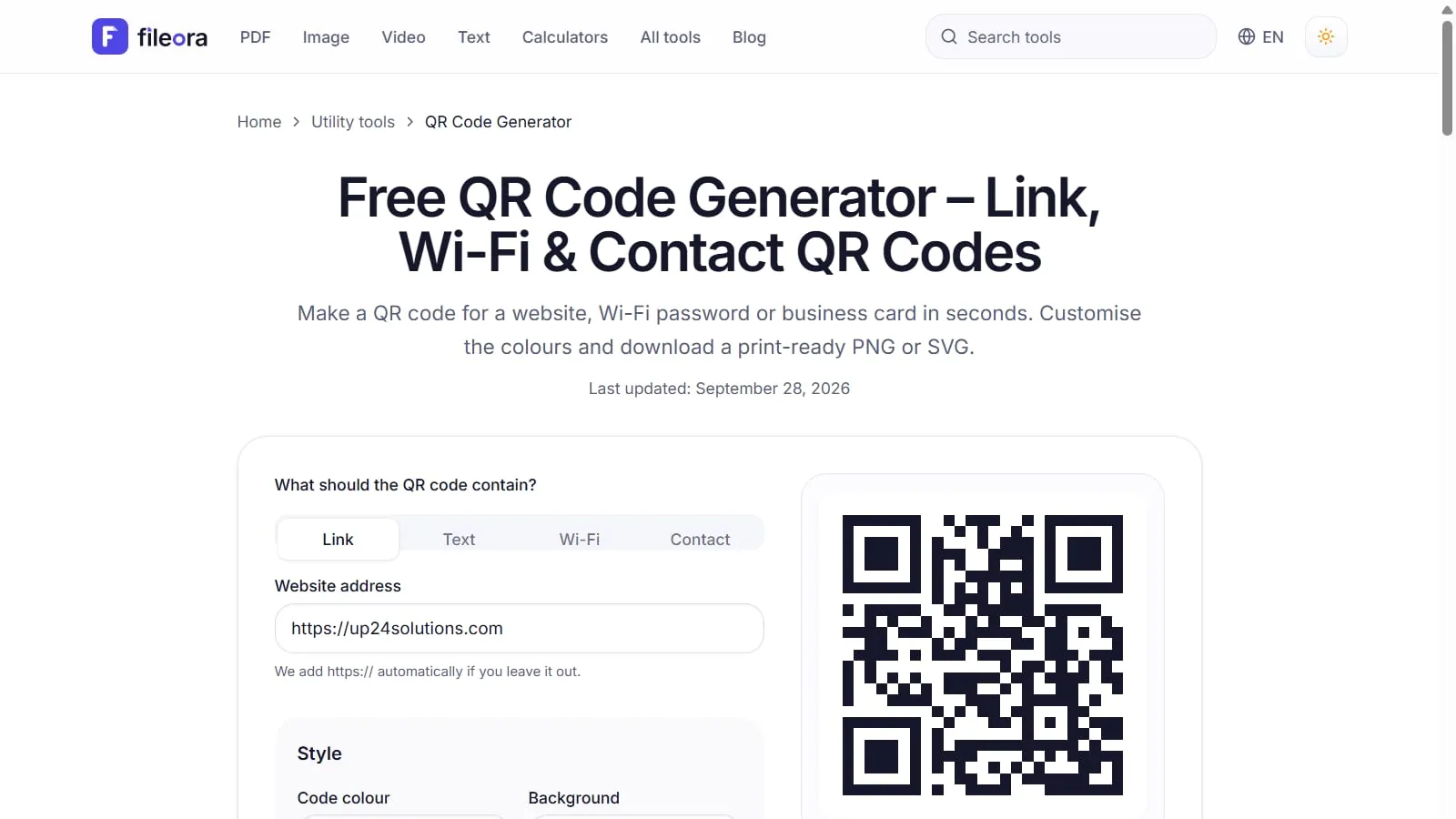
- Everything runs in the browser. Merge, split and compress a PDF, convert and compress images, trim a video, read text from a picture, make a QR code. There is no upload, no sign-up and no watermark.
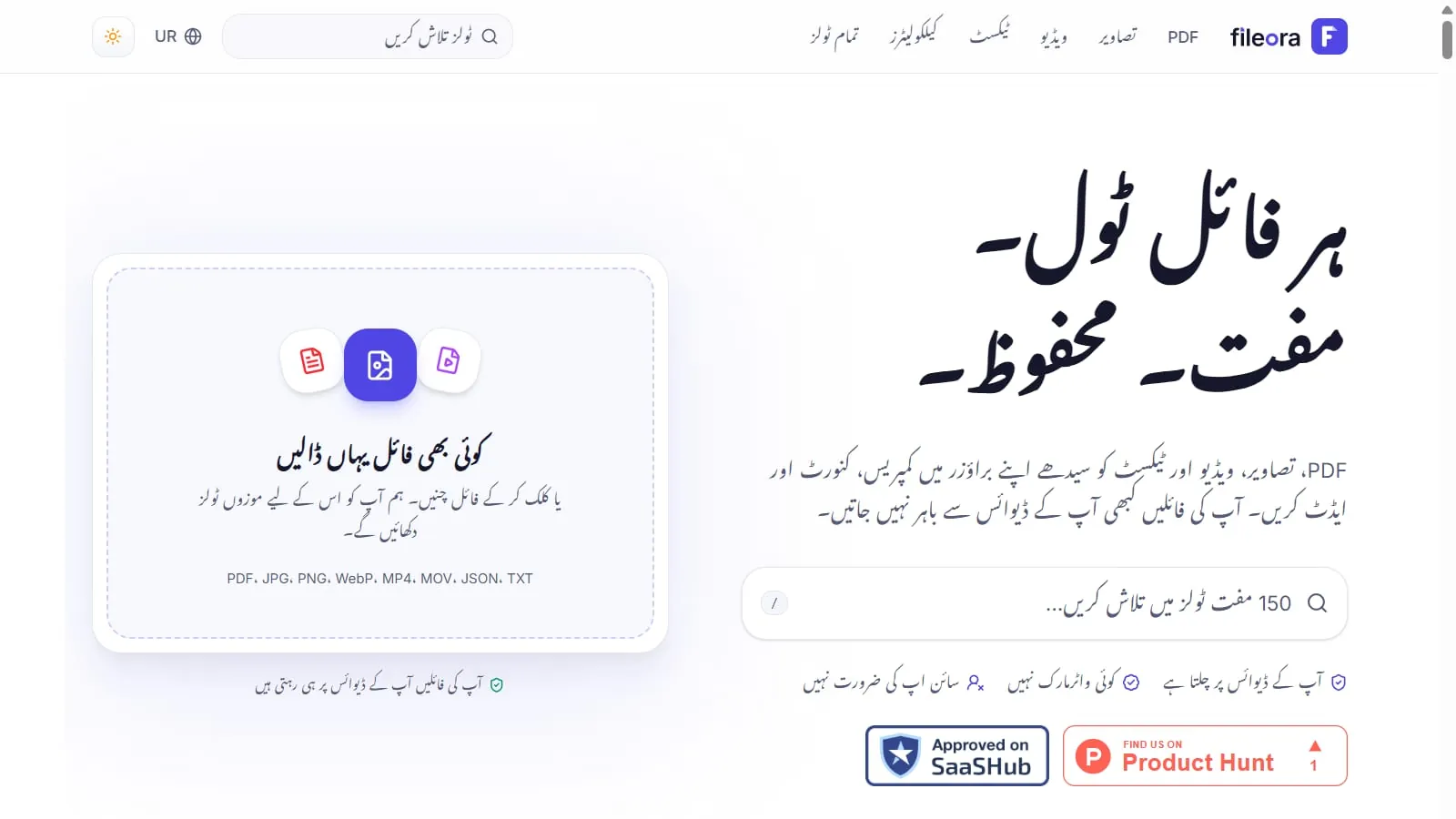
- Five languages. English, Urdu (set right to left, with a proper Urdu typeface), Spanish, Portuguese and Indonesian. A tool appears in a language once its page and text are written for it.
- One page for every tool. Each has a written explanation, questions and answers, and links to related tools, so a person who searches for "compress a PDF" lands on something useful.
- A blog and a changelog.
Decisions that matter
- The file stays on the device. There is no backend and no database. It is the product's main promise, and the architecture makes it true rather than just a claim.
- Heavy code loads only when needed. Each tool's code loads only on its own page, and the video engine, which is large, is fetched when a conversion starts and not when the page opens.
- The build checks the content. A tool cannot go live without its component, its written page and its card text: the build fails if one is missing. A separate check catches incomplete translations.
- Designed for phones first. The tools, the drop area and the buttons are built for a small screen and then scaled up.
How it was built
Next.js and TypeScript with Tailwind CSS and shadcn/ui, hosted on Vercel. The tools use libraries that run in the browser: pdf-lib and pdf.js for PDFs, the Canvas API for images, ffmpeg compiled to WebAssembly for video and audio, and Tesseract.js for reading text from images.
Where it stands
Fileora launched in September 2026 and is free, supported by a small number of clearly marked ads. We are not publishing visitor figures here.
Have a project in mind?
Tell us what you need. If it is not a fit, we will say so and point you to someone who is.